Legal hurdles, practical concerns leave authorities relying on proctors to spot AI cheating
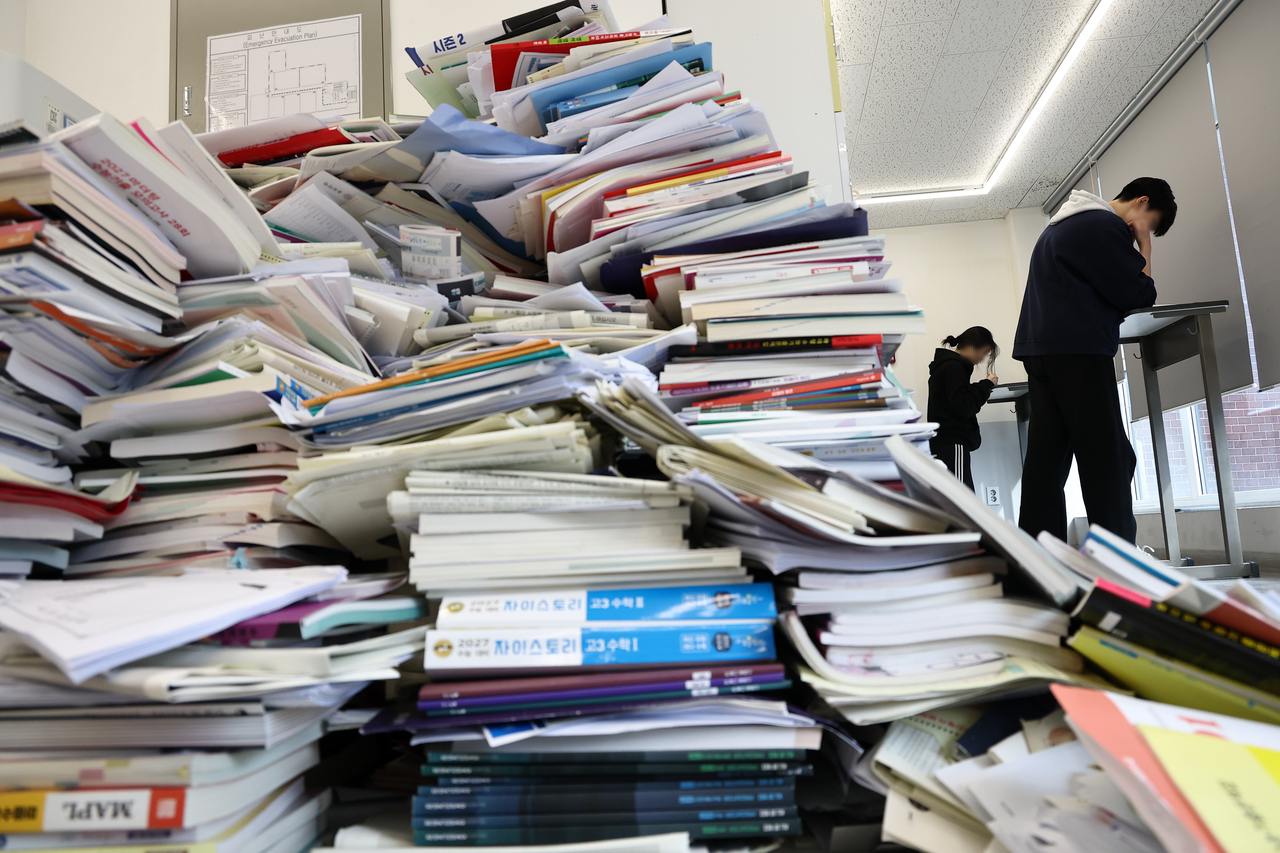
Two days before South Korea’s biggest exam, education officials were still looking for ways to prevent the kind of AI-assisted cheating that had just come to light after the national tax accountant exam.
The top scorer said he had used a miniature camera to photograph the questions, and sent the images to an AI tool via his smartphone. He then read the answers it generated on a small, separate monitor.
The method depended on an internet connection. That gave officials one possible way to stop it from being used on Thursday’s College Scholastic Ability Test, or Suneung: They could jam wireless signals at test centers to prevent devices from sending photos or receiving answers.
Signal jamming disrupts wireless communications by transmitting radio signals that interfere with signals from communication devices. But South Korean law tightly restricts the use of jammers, and education officials say the interference could reach nearby homes or disrupt emergency communications.
With more than 550,000 people due to sit the exam, officials are weighing a more limited last-minute measure.
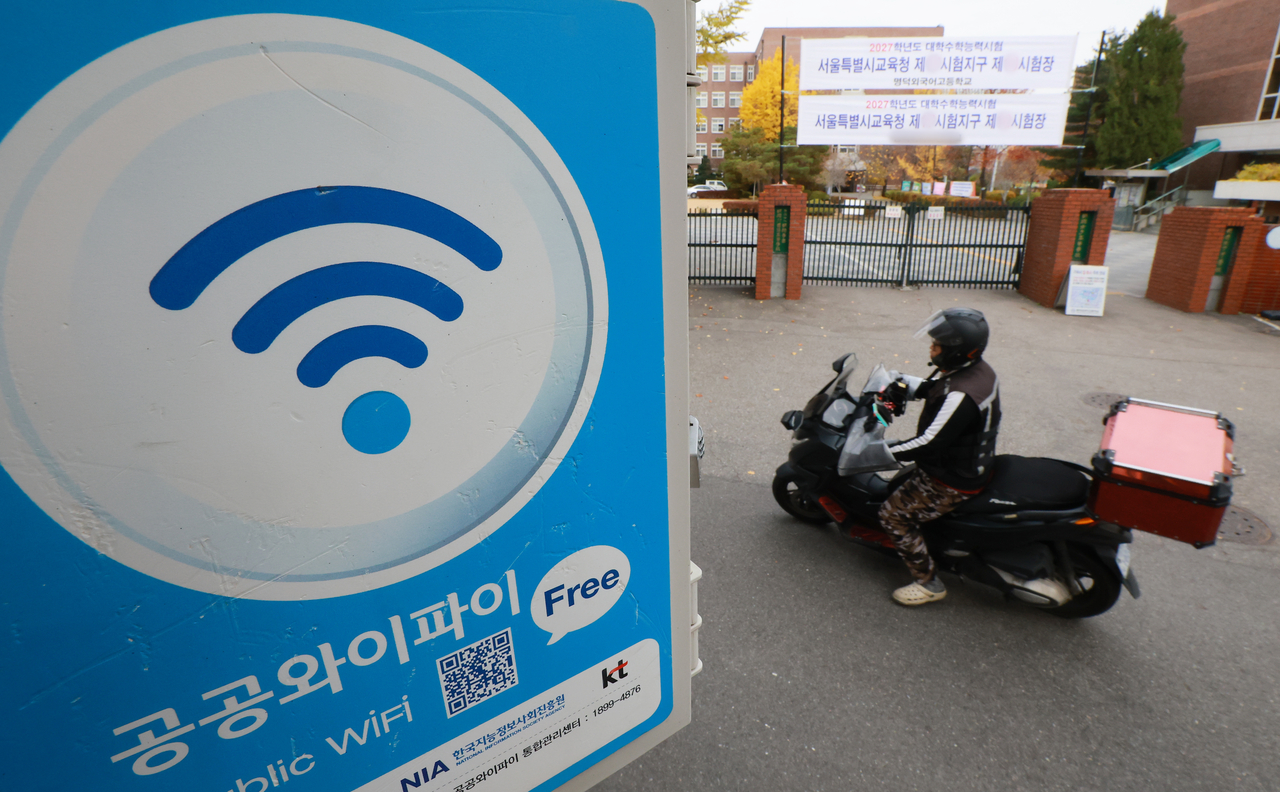
They could switch off public Wi-Fi at test sites, though devices could still connect through mobile networks.
India has used radio-frequency monitoring in some exams to detect signals from electronic devices. In China, some test centers have used AI to flag suspicious behavior in surveillance footage, while some AI providers have temporarily limited tools that can answer questions from uploaded photos.
Technology may not be the answer
A briefing by the Ministry of Education on Monday confirmed that signal jamming will not be used in this year's CSAT.
The measure could prevent devices inside examination venues from connecting to external networks or communicating with other devices. But its use is restricted under the Radio Waves Act, which allows signal-blocking devices only in narrowly defined circumstances involving public safety, such as certain security, counterterrorism and military operations.
The ministry also said that revising the law to allow broader use of such equipment would require careful consideration.
"Basically, schools are located close to residential areas," a ministry official said. "We need to examine whether the measure could interfere with emergency responses at test venues and whether it could have unintended effects on residential areas outside them."
The ministry has also cited legal and practical obstacles to other technological measures.
It said physical searches of students could raise legal concerns and cause psychological distress among test-takers, while recording video footage during examinations would require the consent of all test-takers, making it difficult to introduce as a general measure.
Instead, the ministry emphasized that communication devices have distinctive physical features that proctors can identify through visual inspections. It is also considering blocking public Wi-Fi at test venues during the examination.
What do other countries do?
Criticism of the government's approach has drawn attention to how other countries are seeking to prevent AI-assisted cheating in major examinations.
China, where the nationwide college entrance examination carries significance comparable to that of Korea's CSAT, has reportedly introduced AI-powered surveillance systems that analyze CCTV footage in real time and alert proctors to suspicious behavior, such as repeatedly turning one's head or hiding one's hands under a desk.
Major Chinese AI services, including Alibaba's Qwen and DeepSeek, have also suspended image-recognition functions capable of solving questions from photographs during the examination period. Such measures are easier to coordinate in China, where access to foreign AI services such as ChatGPT is restricted.
India has also adopted stricter anti-cheating measures, including surveillance footage and radio-frequency monitoring in some examinations. Penalties under its Public Examinations (Prevention of Unfair Means) Act have also been strengthened.
Under amendments that took effect in July, individuals involved in cheating face five to 10 years in prison and fines of up to 5 million rupees ($53,500). Those involved in organized cheating face seven to 10 years in prison and fines of at least 100 million rupees.
In Korea, the ruling Democratic Party of Korea is considering legislation that would extend the period during which exam cheaters can be barred from taking examinations to up to 10 years.
Critics, however, say such measures would come too late to address the immediate threat facing this year's CSAT, with some calling for the examination to be postponed until more effective safeguards are in place.
Education Minister Choi Kyo-jin rejected the possibility of postponing the CSAT on Monday, citing concerns about the confusion such a move could cause. Prime Minister Han Seong-sook on Tuesday announced that the test would go ahead as planned with tighter anti-cheating measures in place.
forestjs@heraldcorp.com